Anticipating the future of quantum computing at Davos
27th January 2026
Article by Alexia Yiannouli
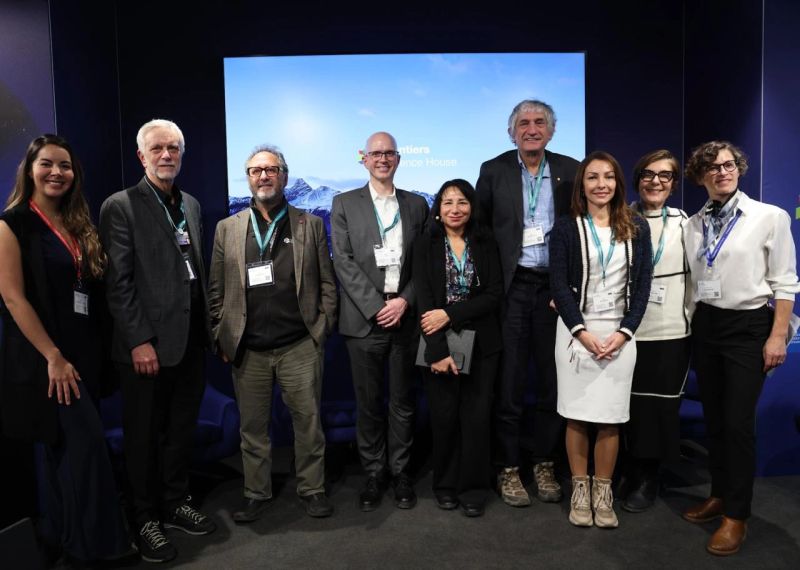
Last week, OQI joined global leaders and policymakers at the World Economic Forum (WEF) in Davos, contributing to conversations on the evolving landscape of quantum computing.
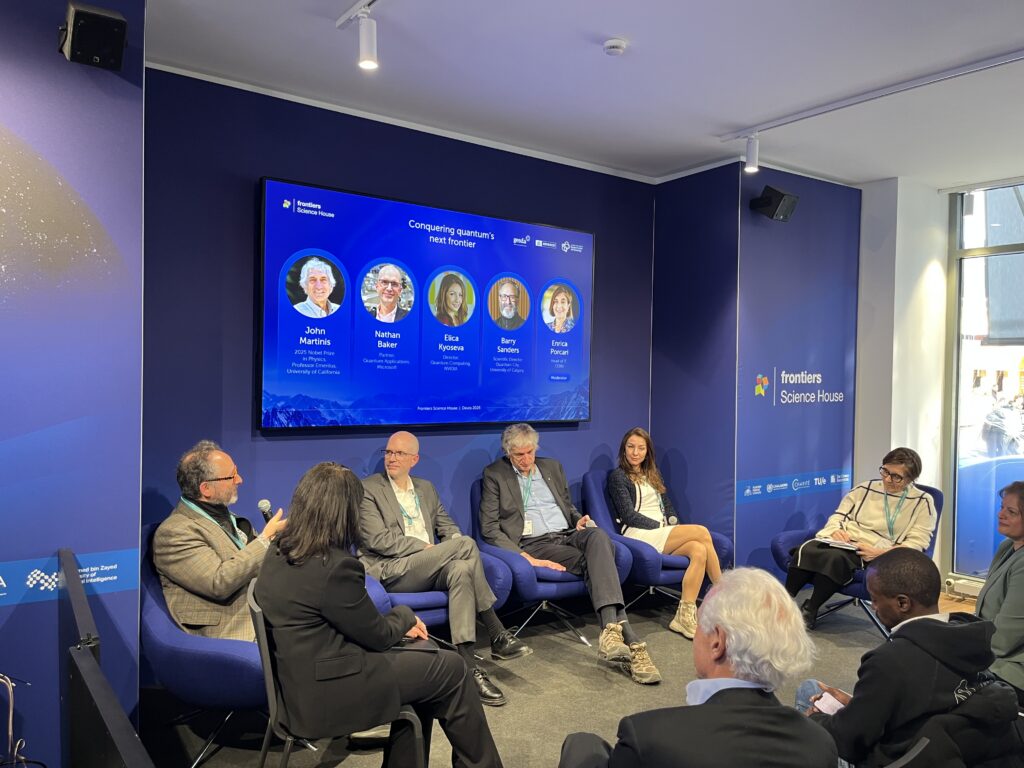
OQI contributed to the Science House session ‘Conquering quantum’s next frontier’, hosted by Frontiers in partnership with GESDA. The session brought together leading experts to discuss integral topics to OQI’s mission, including developing quantum computing applications that advance the UN Sustainable Development Goals (SDGs) and establishing frameworks to ensure the responsible and equitable access and use of the technology and the anticipatory global governance of the technology.
Amal Kasry (Chief of the Section for Basic Sciences, Research, Innovation, and Engineering at UNESCO) opened the session with some reflections on the International Year of Quantum (IYQ), highlighting some of the global initiatives emerging throughout the year. A quick overview of a Global Quantum Initiative was presented on how to propel momentum beyond 2025 with sustained action, where OQI will continue to play a critical role as implementation partner.
The session continued with a panel, moderated by Enrica Porcari (Chief Information Officer at CERN and Strategic Advisor to OQI), who outlined the role of OQI in anticipating global challenges and emphasised OQI’s multistakeholder approach, with a growing community consisting of academia, industry, diplomats, UN organisations and policymakers.
Members of the OQI community were in the panel: Elica Kyoseva (Director of Quantum Algorithm Engineering, NVIDIA, and OQI Advisory Committee), Barry Sanders (Scientific Director, Quantum City, University of Calgary, and OQI Advisory Committee), Nathan Baker (Senior Director, Partnerships for Chemistry and Materials, Microsoft), and John Martinis (Professor Emeritus, University of California Santa Barbara, Chief Technology Officer, Qolab, and 2025 Nobel Prize in Physics).
The panel discussion was centered around identifying the most prominent opportunities and risks of the developing and using the technology, in particular addressing factors such as:
- The field of quantum computing is rapidly evolving, both in hardware and software development. Whereas global collaboration is critical to sustaining this progress, current geopolitical dynamics and regulatory measures increasingly pose challenges to such cooperation.
- Hybrid approaches that incorporate quantum computing with AI and HPC are starting to change the way we solve complex problems currently intractable by classical methods alone, and are expected to drive future discoveries in materials science, drug development, and more.
- While exploring future applications of quantum computing, it is important to anticipate its impact on society and to develop today a global governance that will ensure inclusive and equitable access to the technology and its benefits, develop applications that will benefit humanity (accelerate the achievement of the SDGs and beyond), ensure that the technology and its deployment remain safe and responsible. This underscores the importance of anticipatory governance and highlights the role of GESDA, where OQI was born, in bridging the gap between ‘fast’ science and diplomacy and enabling multilateral governance of the technology.
Reflecting on the challenges, Barry Sanders elaborated: “As quantum computing continues to advance, we should collectively consider both the opportunities as well as the risks if we are to anticipate its impact and ensure its development to be inclusive and accessible for all.”
“The key insight is that quantum is no longer a distant scientific ambition – it is becoming a strategic infrastructure. What matters now is not just who achieves quantum breakthroughs first, but how we build them: collaboratively, responsibly, and with open science at the core,” emphasised Enrica.
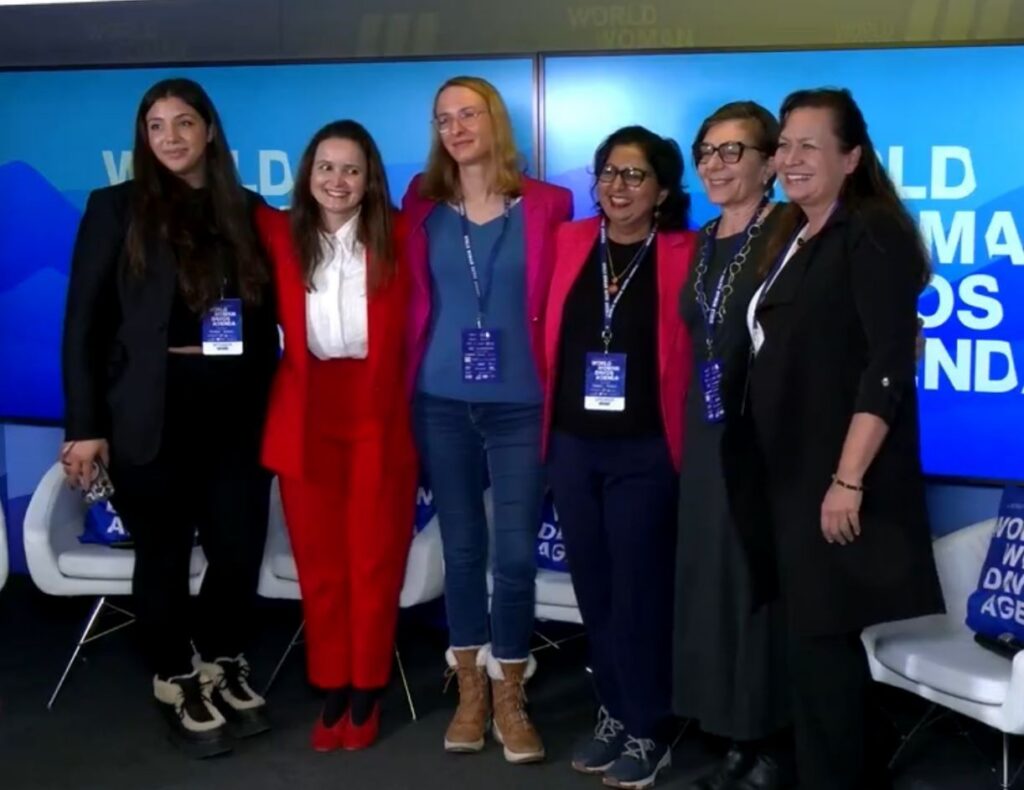
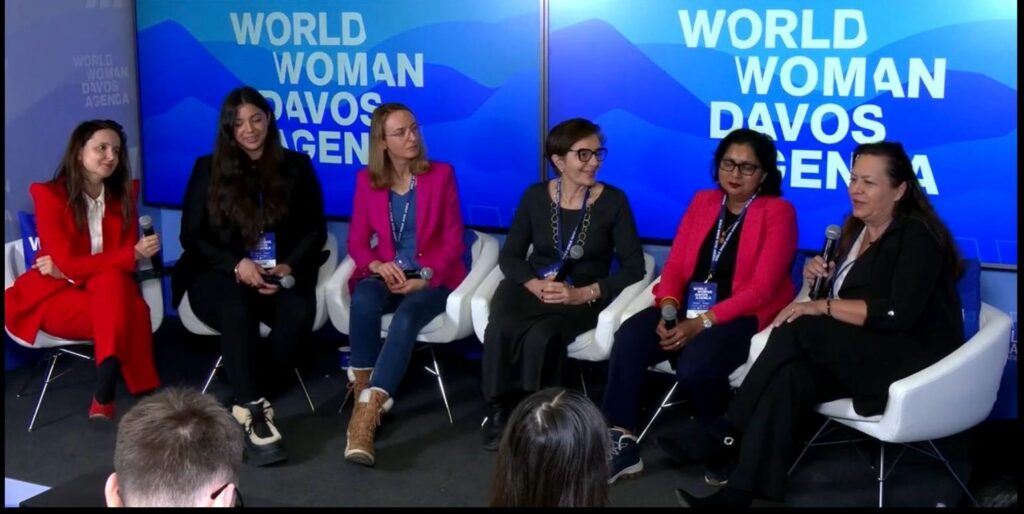
Enrica Porcari also participated in a World Woman Foundation session on Quantum Economy and Equality Moonshot, alongside other inspiring women leaders in quantum technology, most of them already part of the OQI community. Conversations centered on the responsible governance of quantum technology, exploring questions or responsibility, governance and collaboration. The panel reflected on the lessons learned from the rapid growth of AI, and how these learnings can help guide quantum innovation towards a more equitable future. Panellists addressed key topics such as education and accessibility, highlighting the importance of inclusivity in shaping the next generation of quantum talent, with panellists each reflecting on their own unique path into quantum.
As the IYQ comes to a close, it’s clear that the development of quantum computing requires a collective effort and anticipation, building momentum and ensuring no one is left behind.