
William Aguilar-Calvo: how hackathons in Costa Rica and Uruguay opened international doors
16th November 2026
OQI Portraits introduces people involved in OQI-supported activities, exploring their journeys and perspectives on quantum technologies. In this edition, we meet William Aguilar-Calvo, who reflects on his experiences in Costa Rica and Uruguay, the connections he made and his next steps in quantum research.
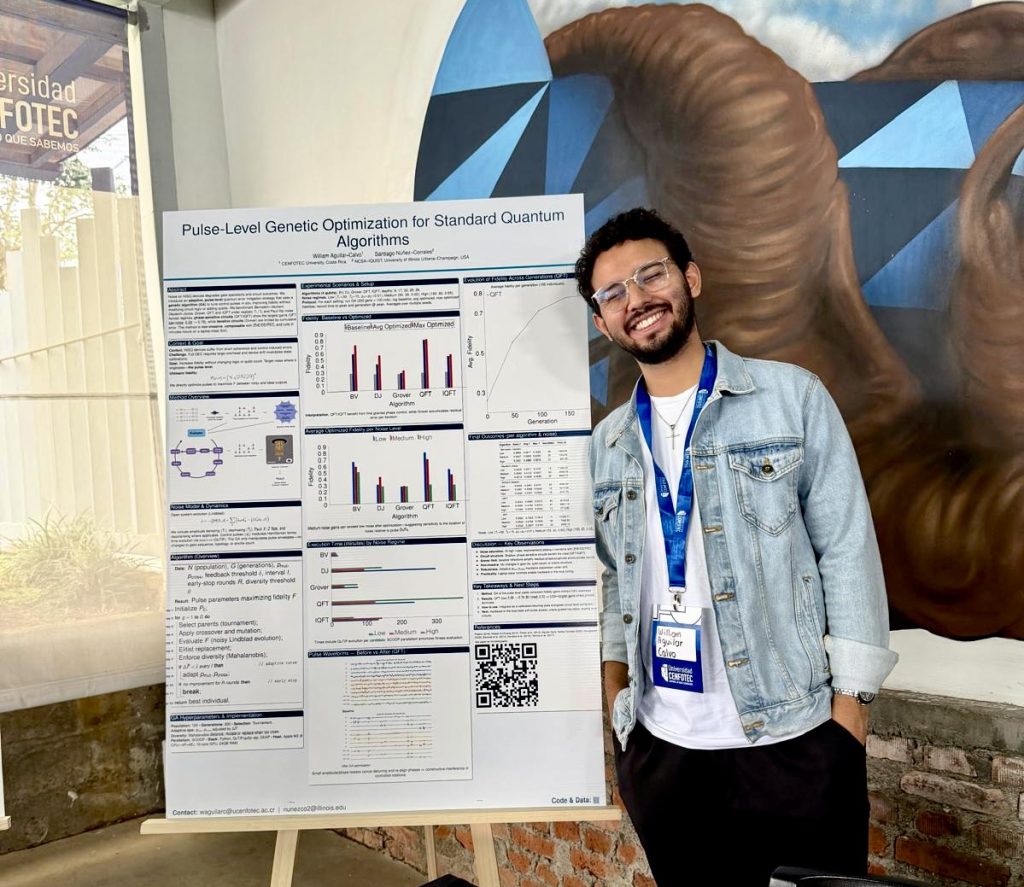
Originally from Costa Rica, William Aguilar-Calvo is a Ph.D. student in the Department of Electrical, Computer, and Systems Engineering (ECSE) at Rensselaer Polytechnic Institute (RPI). His research focuses on quantum error correction, hardware-aware quantum computing, and error mitigation using mid-circuit measurements.
1. What first drew you to quantum computing?
My interest in quantum computing began in 2023, when I received a scholarship from Universidad CENFOTEC in Costa Rica and joined the Quantum Programming Languages and Architecture Laboratory (QuPAL) as a researcher under the supervision of Dr. Santiago Núñez-Corrales.
I entered the laboratory with very little knowledge of physics and a great deal of curiosity. What made the experience extraordinary was Santiago himself. With remarkable patience, he introduced me to ideas that initially seemed far beyond my reach and encouraged me to keep asking questions. Looking back, what I value most is not only everything he taught me about physics, but also the confidence he helped me build. He saw potential in me long before I knew it was there.
2. What was your experience in Uruguay like, and what did you gain from it?
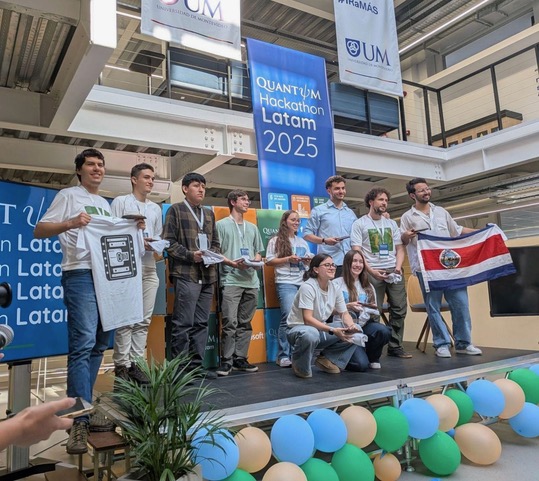
In 2025, I served as a mentor at the first OQI – supported quantum hackathon in Latin America Quantum for Climate, hosted by the University of Montevideo Uruguay, where I met talented people from across the region, including Colombia, Brazil, and especially Chile. Some of those connections have grown into friendships that continue today.
My team, Q-ENSO, was among the winners, but the most lasting outcome was something I could not have anticipated. At the event, I met researchers from qBraid, one of the sponsors, who later offered me a research internship. Over the following months, I contributed to a project with collaborators from NVIDIA and IonQ on reducing errors in quantum simulations, which led to a research paper.
Uruguay showed me that events like this are more than competitions. They can create genuine friendships, introduce young researchers to international scientific communities, and open doors that are otherwise difficult to find in our region.
3. You are a mentor yourself – what motivates you to volunteer, and what role do you hope to play in developing the quantum ecosystem in Costa Rica?
Some of the most important steps in my career became possible because others were willing to share their time, knowledge, and encouragement. That experience is what motivates me to mentor: I know how much guidance can matter when someone is just beginning to find their place in science.
Latin America has extraordinary talent, but access to research opportunities and international networks is far from equal. Initiatives such as the Open Quantum Institute (OQI) can help close that gap by connecting young people with communities and opportunities that might otherwise remain out of reach.
I hope to contribute to the quantum ecosystem not only in Costa Rica, but throughout Latin America. Beyond sharing what I have learned, I want my own journey to show younger researchers that an international scientific career is possible, even when the path is not obvious at the beginning.
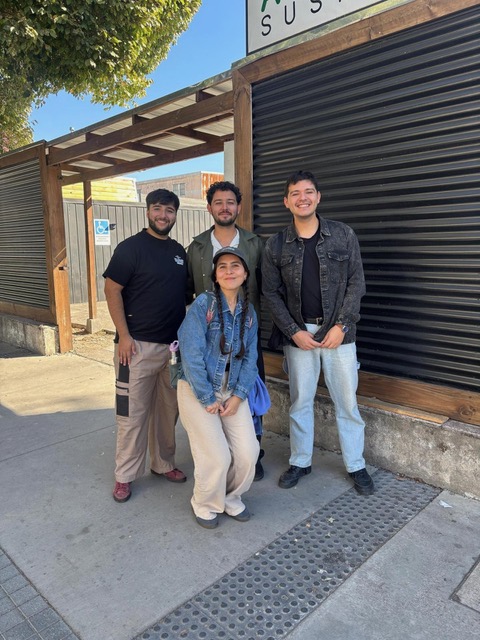
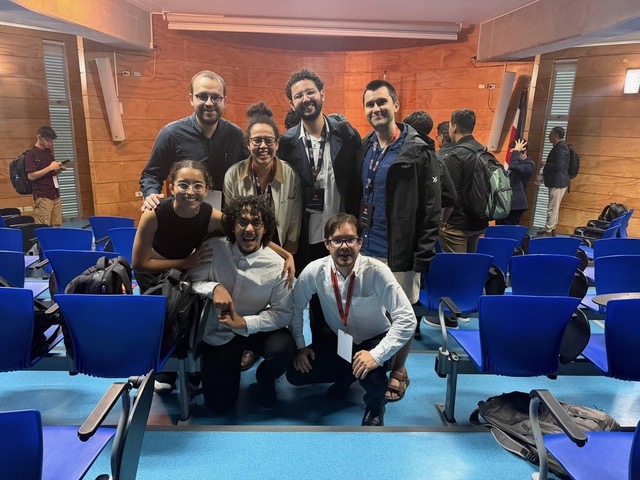
William with participants at the hackathon in Costa Rica.
4. How have these experiences shaped your personal development and career choices?
In 2026, I moved from Costa Rica to New York to begin my Ph.D. at Rensselaer Polytechnic Institute (RPI), where I now work entirely in quantum computing under the supervision of Dr. Kanad Basu at the TIES Lab. RPI was an institution I had long hoped to join because of its remarkable quantum computing infrastructure. Being here, doing the research I once only imagined pursuing, has been a defining moment in my life.
That move did not happen in isolation. It grew out of the people who guided me, the opportunities I was given, and the collaborations that gradually expanded what seemed possible. I am deeply grateful for every part of that journey. Coming from my background, I know reaching this point would have been far more difficult without those initiatives, and that awareness continues to shape both my work and my sense of responsibility to others.
5. What message would you like to share with students like you?
If my journey has taught me anything, it is that talent is everywhere, but opportunity is not. We often hear that hard work guarantees success, yet for many young people, especially in Latin America, access to research and international scientific networks remains limited.
I would not be where I am without people who believed in me and opened doors I could not have opened alone. Initiatives like the Open Quantum Institute (OQI) matter because they help make those doors accessible to others.
So, to students starting out: stay curious, look for those openings, and do not let uncertainty convince you that you do not belong. Antoine de Saint-Exupéry wrote, “I must endure the presence of two or three caterpillars if I wish to become acquainted with the butterflies.” Sometimes, taking that first uncertain step leads somewhere you never imagined. It did for me.