Quantum computing for climate action: two OQI use cases
23rd October 2026
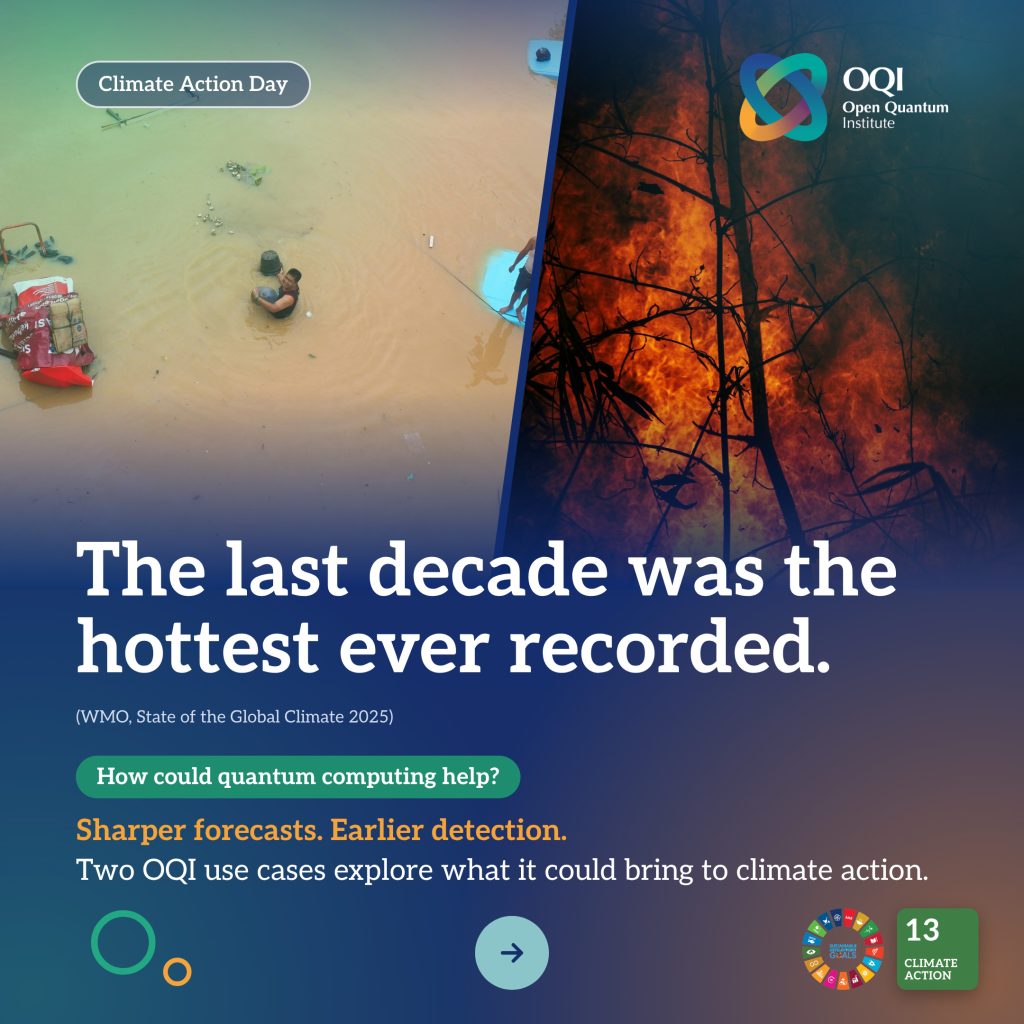
Floods, fires, forest degradation. What if advanced computing could help us model climate disasters for earlier prevention? And how could quantum computing help?
The last decade was the hottest ever recorded, and extreme weather is hitting harder:
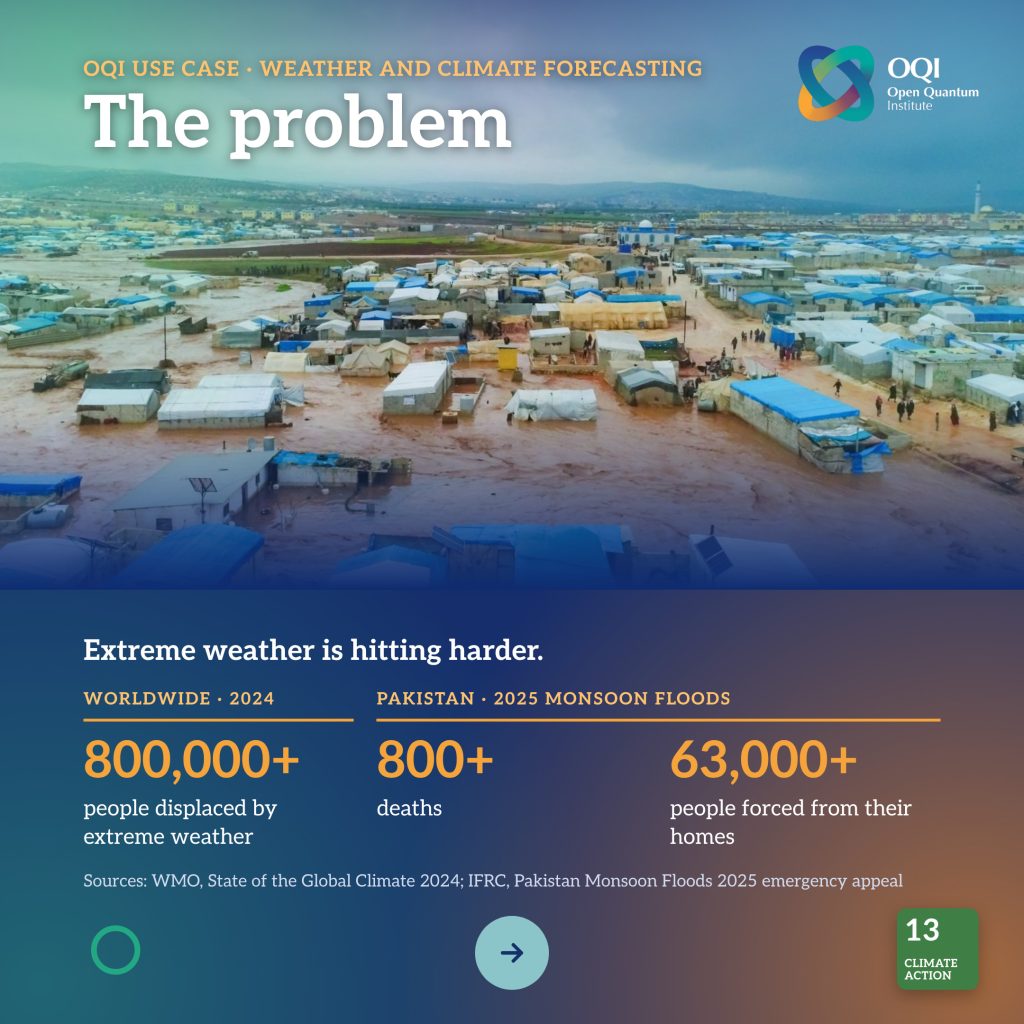
- More than 800,000 people were displaced by extreme weather worldwide in 2024.
- Pakistan’s 2025 monsoon floods caused more than 800 deaths and forced over 63,000 people from their homes.
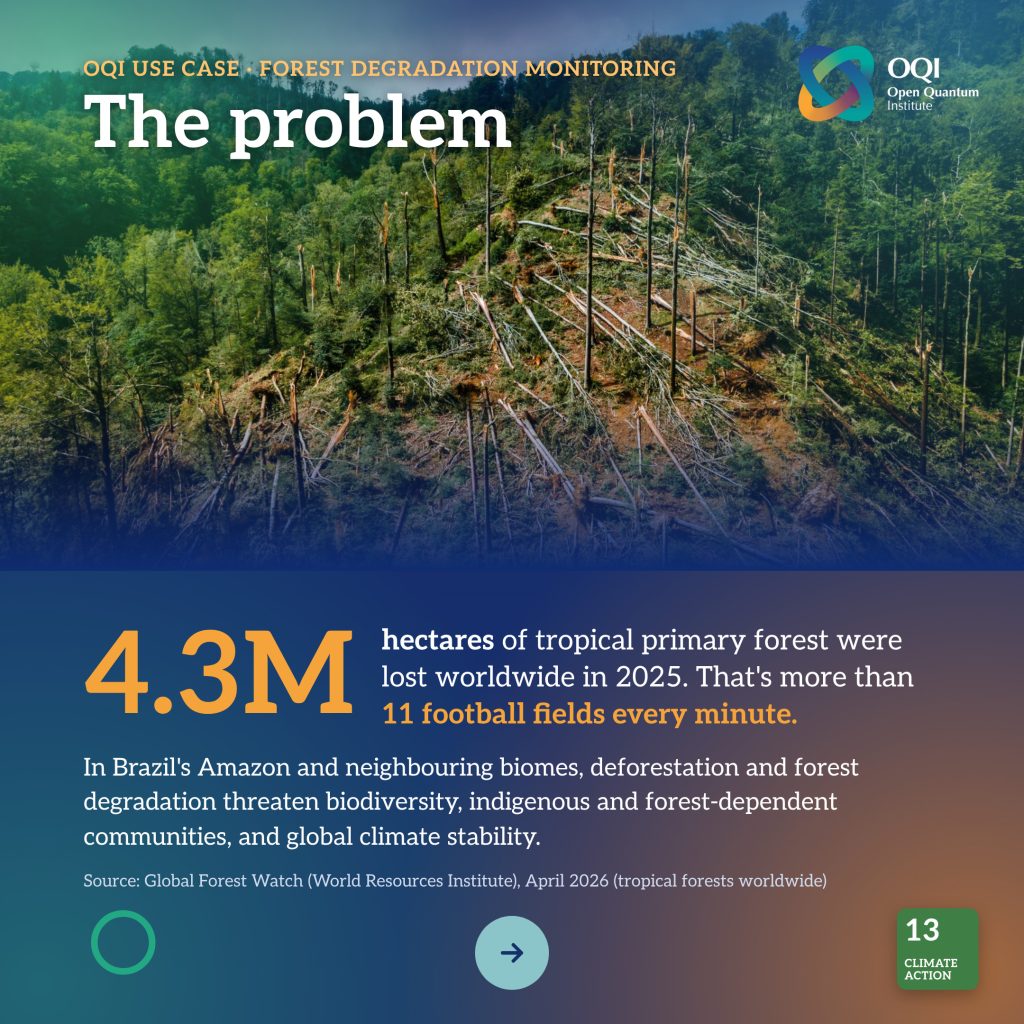
- 4.3 million hectares of tropical primary forest were lost worldwide in 2025. That’s the equivalent of more than 11 football fields every minute.
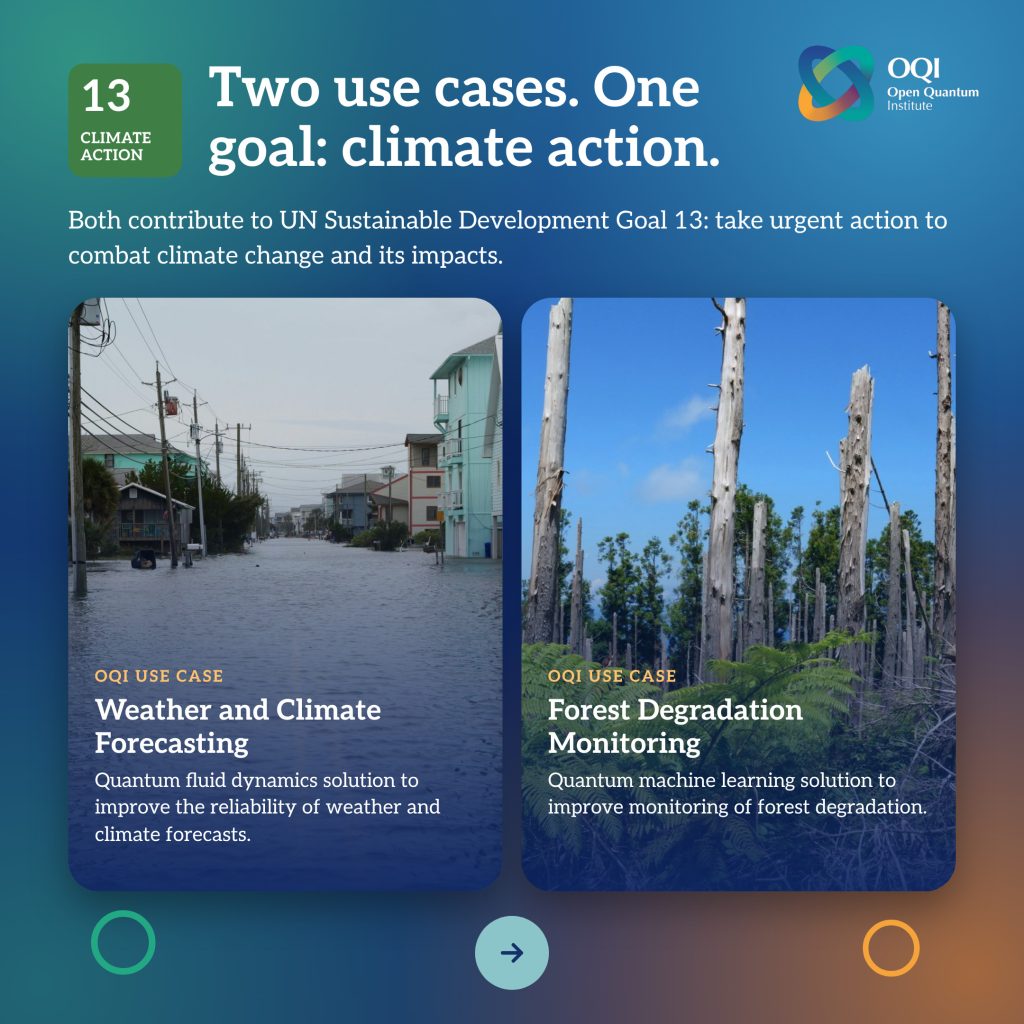
Two OQI use cases that contribute to UN Sustainable Development Goal 13: take urgent action to combat climate change and its impacts.
Weather and Climate Forecasting
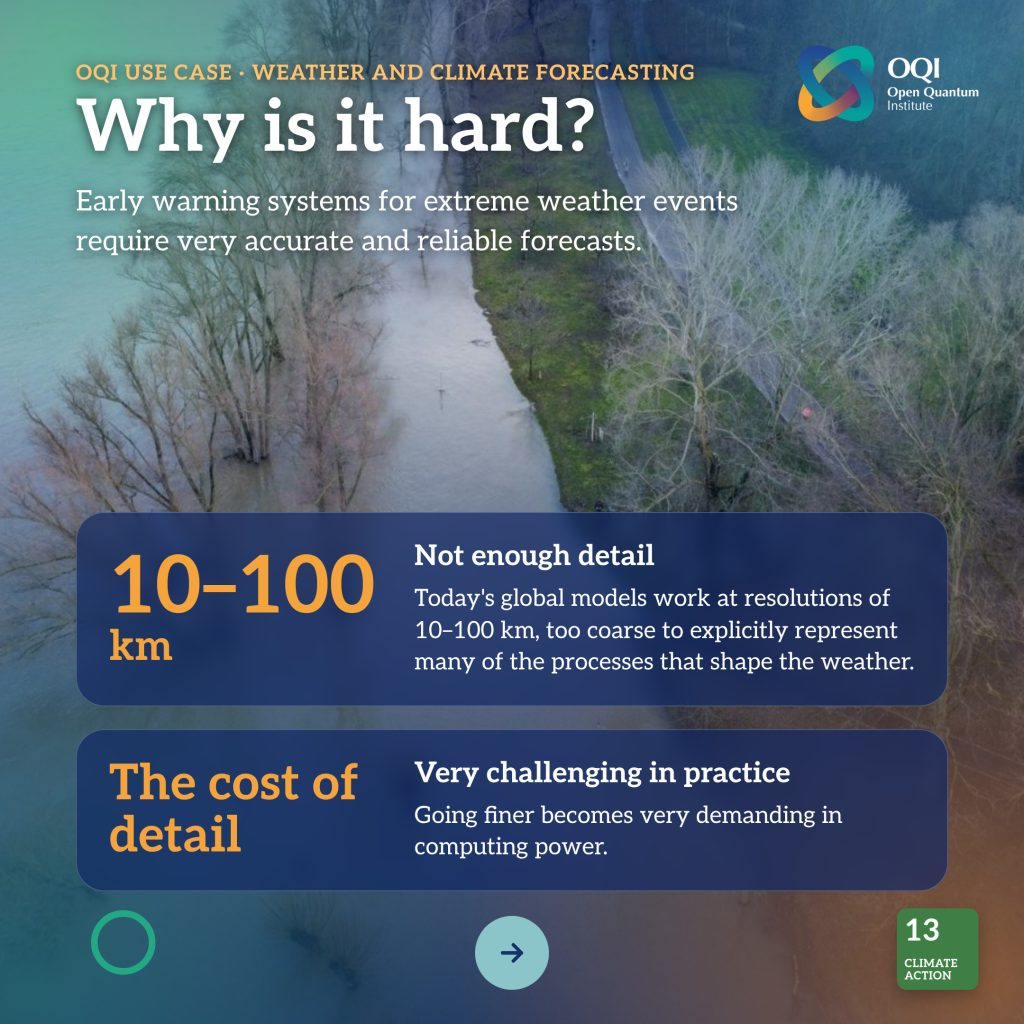
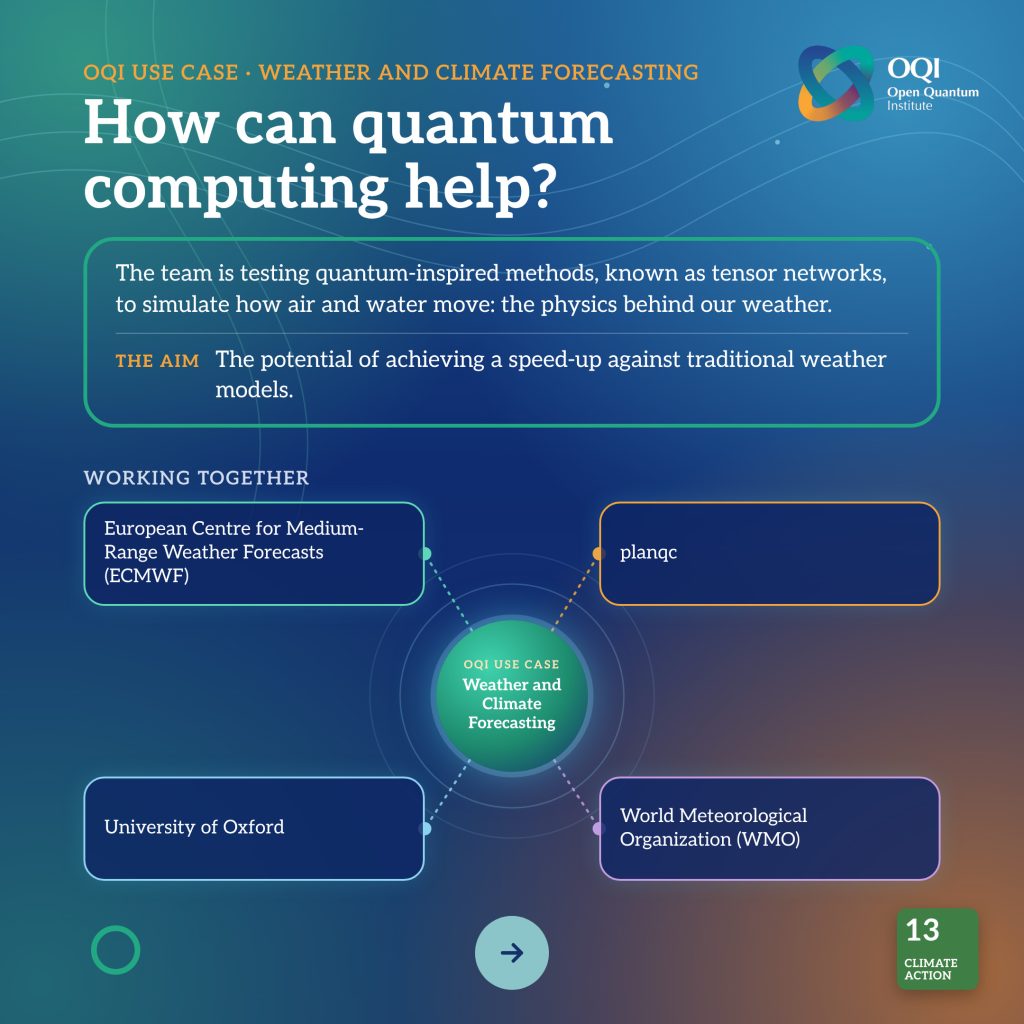
Early warning systems for extreme weather need highly accurate, reliable forecasts. Today’s global models work at resolutions of 10–100 km. That’s too coarse to represent many of the processes that shape the weather. The team is testing quantum-inspired methods, known as tensor networks, to simulate atmospheric flows and the physical processes behind weather and climate.
Partners: planqc, European Centre for Medium-Range Weather Forecasts (ECMWF), University of Oxford and World Meteorological Organization (WMO)
Forest Degradation Monitoring
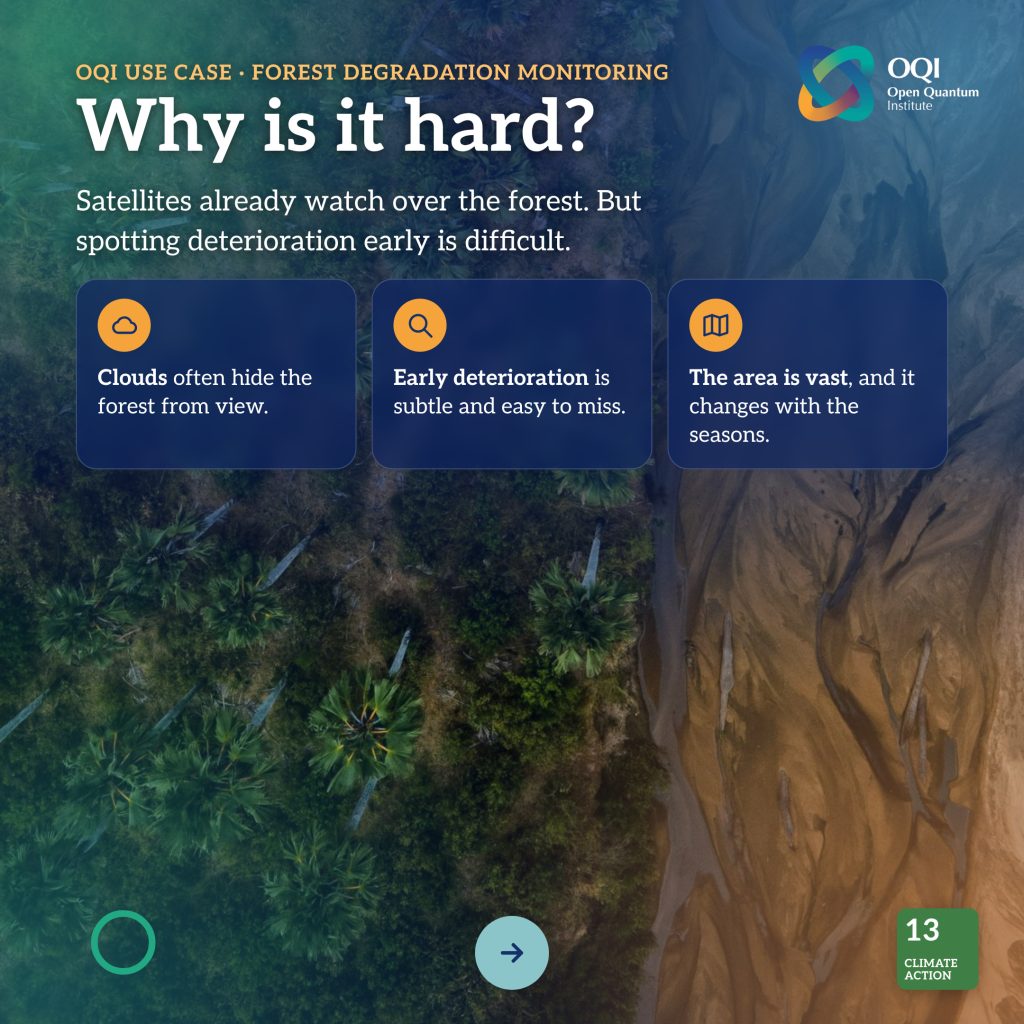
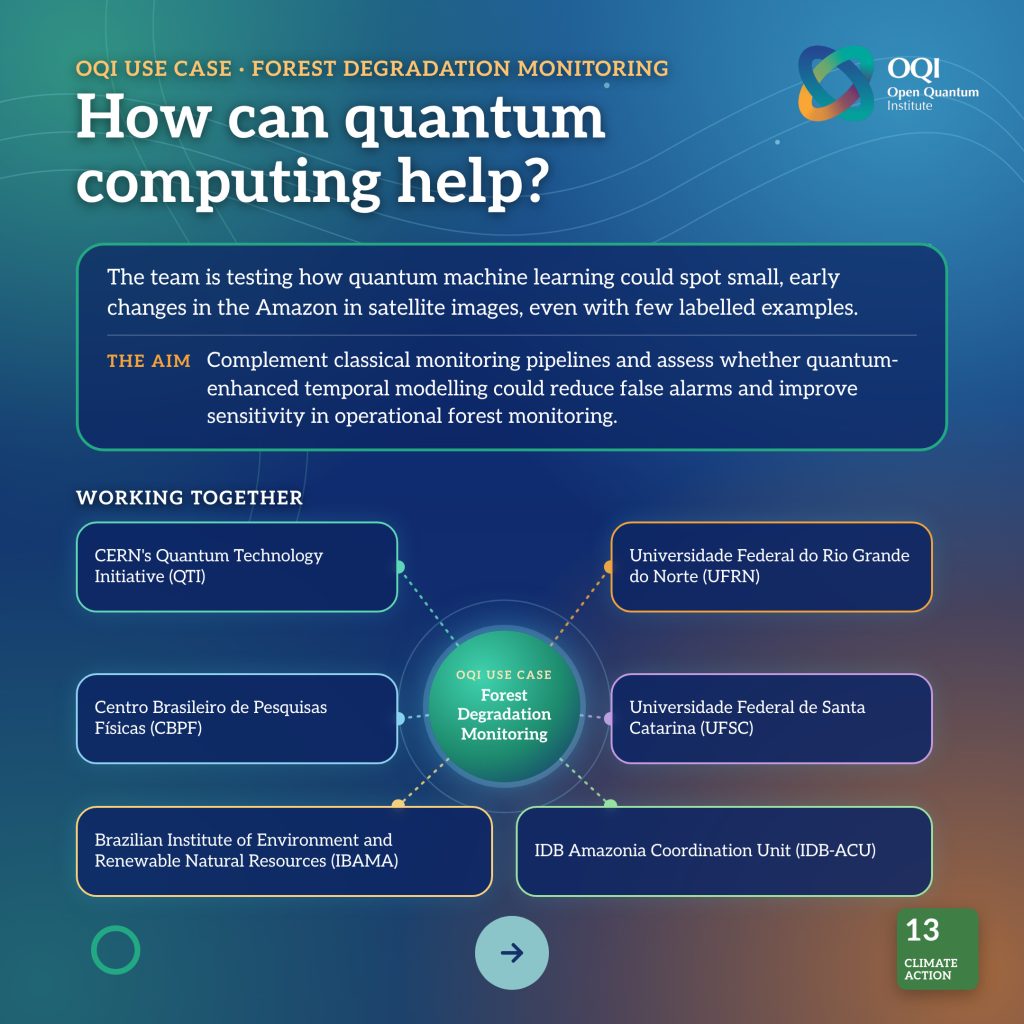
Satellites already watch over the forest, but spotting deterioration early is difficult. The team is testing whether quantum machine learning could detect small, early changes in satellite images of the Amazon, even with few labelled examples.
Partners: CERN Quantum Technology Initiative, Universidade Federal do Rio Grande do Norte (UFRN), Centro Brasileiro de Pesquisas Físicas (CBPF), Universidade Federal de Santa Catarina (UFSC), Brazilian Institute of Environment and Renewable Natural Resources (IBAMA) and the Inter-American Development Bank (IDB) Amazonia Coordination Unit
For more details on these use cases, explore the infographics below and visit the OQI website: