
Where AI meets quantum computing
14th July 2026
Article by Marzena Lapka
©ITU/Pierre Albouy
Artificial intelligence carries a hard but valuable lesson: how much it matters to guide a powerful technology from its earliest days.
This July in Geneva, at the AI for Good Global Summit 2026 and the World Summit on the Information Society (WSIS) Forum 2026, one conversation kept surfacing: artificial intelligence and quantum technologies are converging, and they raise the same fundamental questions. Who gets access? Who builds the skills? And how do we govern tools this powerful?
Quantum computing arrives with a rare advantage: the lessons of AI, where the divide formed faster than the world could respond and closing it remains work in progress. Quantum does not have to follow the same path. Emerging with those lessons in hand, it offers a real opportunity to get it right from the start: to keep the technology open, accessible and directed at societal benefit.
That ambition ran through every contribution the Open Quantum Institute (OQI) team brought to the week in Geneva — across sessions on governance, education, water and ethics.
Getting ahead of the technology so impact can scale
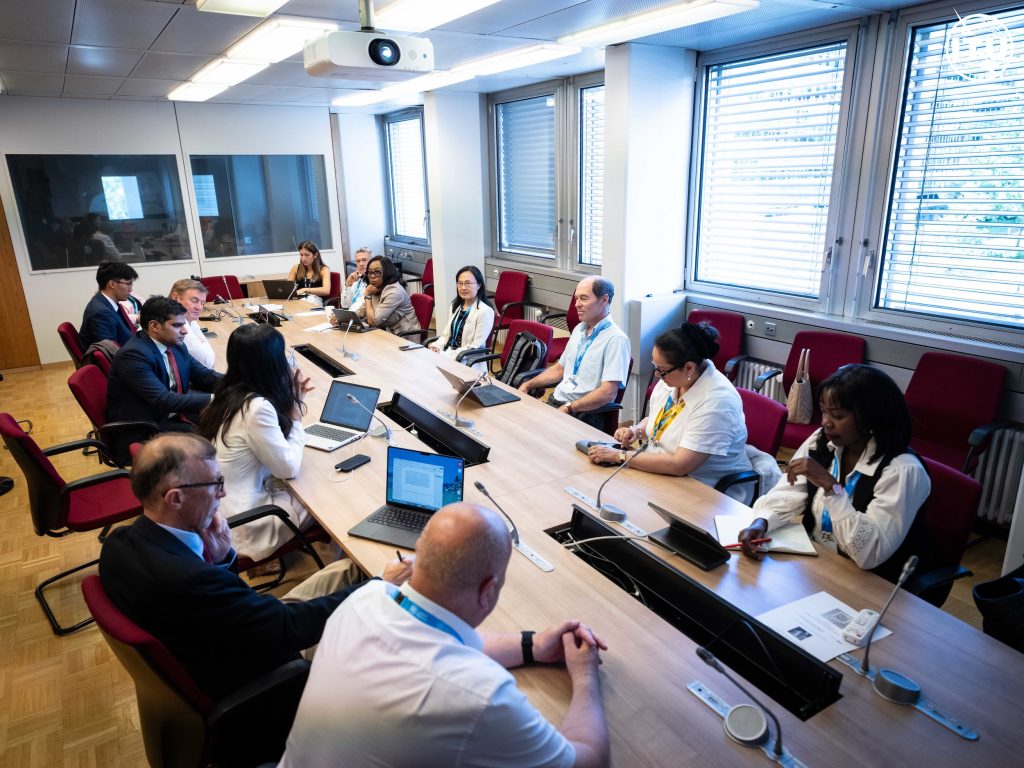
At the UN High-Level Leaders Dialogue at WSIS Forum 2026, Enrica Porcari, CERN’s Chief Information Officer, made the case that governance cannot be an afterthought. As AI, quantum technologies and whatever comes next begin to reshape society, the question is not only what we can build, but whether we are creating the conditions for those technologies to remain open, accessible and responsibly governed. She pointed to the Open Quantum Institute (OQI), hosted by CERN, as a practical answer for quantum computing, ensuring the technology is explored early, openly and with societal benefit in mind.
Quantum science for society
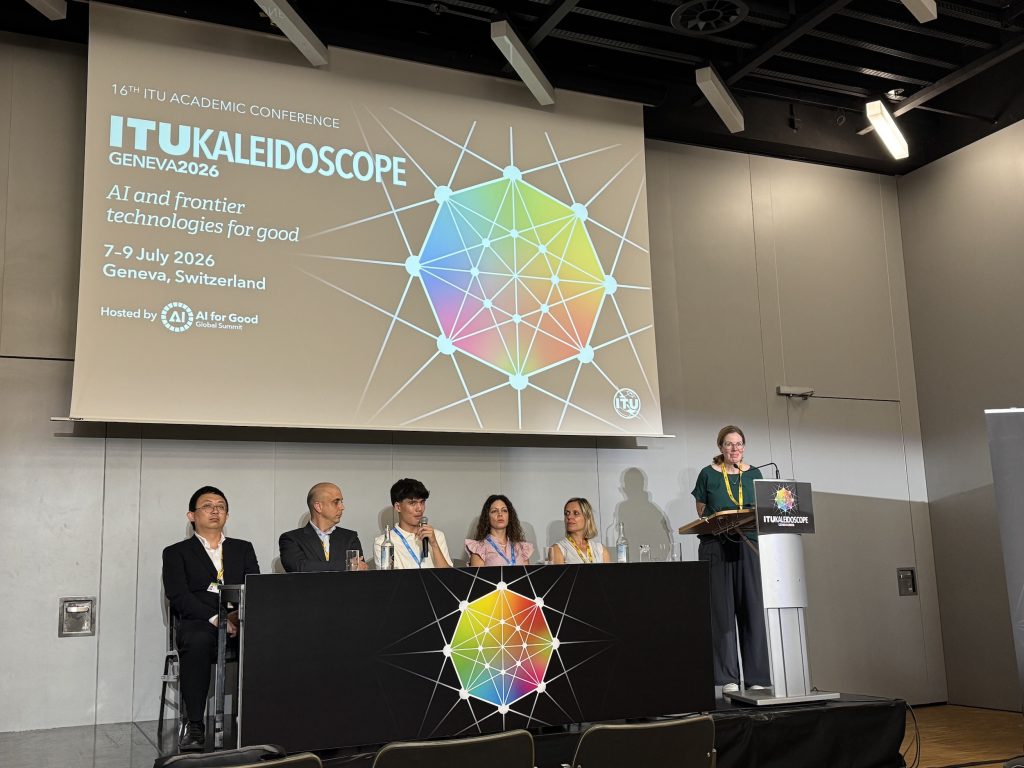
A lively, interactive panel “Quantum science for society: Collaborating on real-world applications and educational pathways”, represented by Henry Shintaro Ryder from OQI, explored how advances in quantum science can translate into concrete results for society. The emphasis was on collaboration across disciplines and sectors: linking emerging technological capabilities with real-world applications, and with the educational pathways needed to equip the next generation to engage with these developments.
The discussion looked at what the future holds for quantum education and the steps already being taken in the right direction, with openness and access for all as guiding principles. The panel also highlighted how OQI uses cross-disciplinary collaboration to remove ambiguity about what quantum computing can help with, linking it directly to the UN Sustainable Development Goals.
Deep skilling for the quantum age
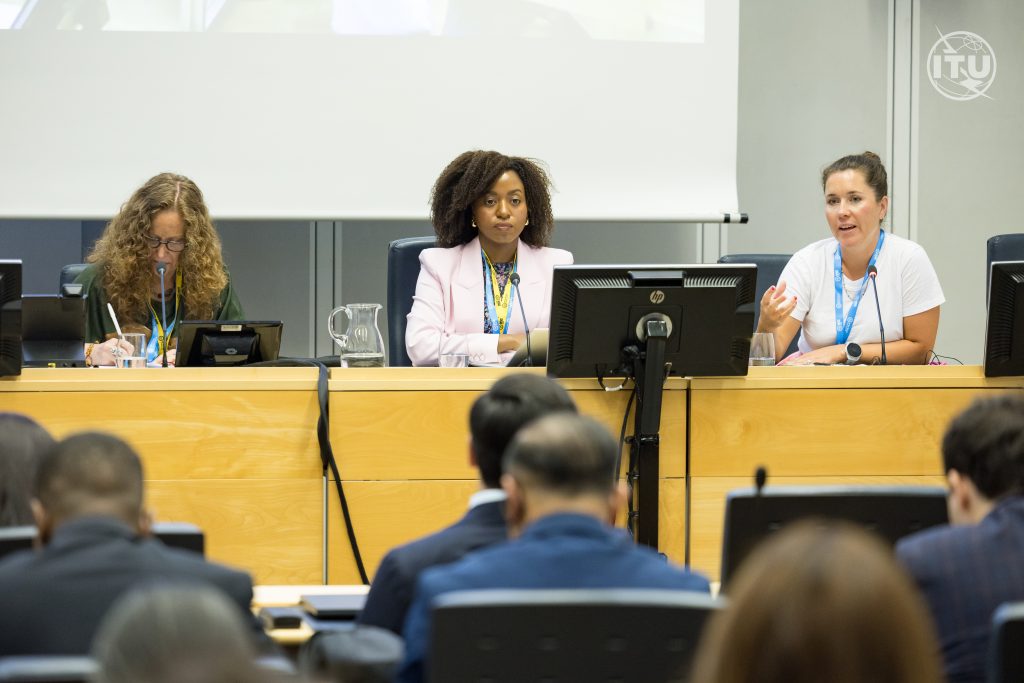
The WSIS session “Deep Skilling for the Quantum Age: A Global Education Model for Women and Girls”, with Audrey Himmer from OQI, started from a gap most quantum education programmes do not address. They train the quantum scientist — the physicist, computer scientist or mathematician who advances science. But the applied value of quantum will largely be realised by a second kind of talent: the domain expert made quantum-capable. The chemist who can use quantum methods for molecular simulation, the financier who can apply them to risk, the biologist who can apply them to discovery. Building this second kind of talent is where the largest workforce effect of the quantum transition will be felt.
The full and equal participation of women and girls is a central commitment of the global education model presented. In every major technology transition, women have been the last to gain access and the first to bear the economic consequences. With the quantum transition running on a more compressed timeline than previous ones, the decisions made now about who gets access will set economic participation patterns for a generation.
Every drop counts: quantum computing for water
Clean water and sanitation for all (SDG 6) remains one of the world’s most pressing goals — and one where better computation can genuinely move the needle.
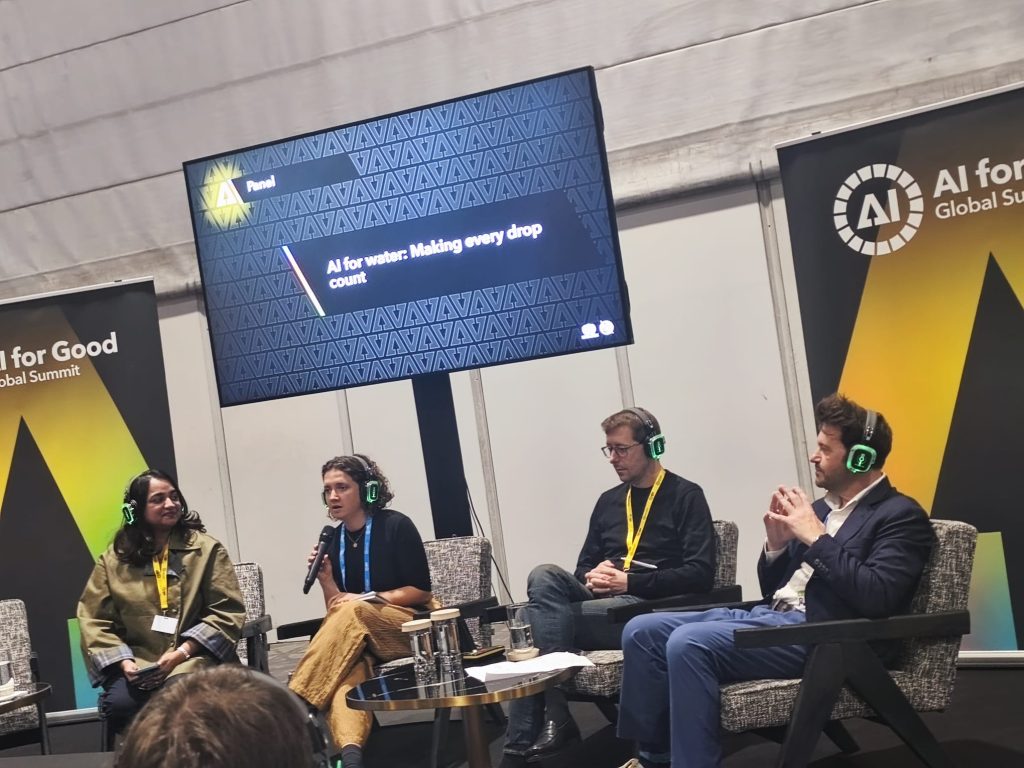
At the session “AI for Water: Every Drop Counts”, OQI’s Alex Bernasconi widened the lens beyond AI, presenting its quantum computing use cases: water leak detection, molecular docking to clean up pollution, water resource management, and weather and climate forecasting — the latter two developed in close collaboration with the World Meteorological Organization (WMO).
This theme carried into the WSIS session “Smart Hydrology: Data, AI and the Future of Water Management”, with OQI’s Tim Smith on the panel. The transformative effect of AI on hydrology forecasting, risk assessment and decision making is clear, as is the continued value of hybrid approaches that rely on the precision of physics-based hydrological models. As these models become more complex, with more parameters, and expand to include geology, meteorology, and climate, quantum computing approaches are showing promise. Having cross-sector, cross-agency projects like OQI stimulates people to collaborate across boundaries and implement interoperability between data systems.
Ethics built in, not bolted on
At the WSIS session “Ethics of the Information Society: Navigating the governance landscape of emerging and converging technologies”, OQI’s message, brought by Mira Wolf-Bauwens, was direct: ethics only sticks when it is built into incentives, not bolted on as a statement.
Principles on paper don’t move markets, she argued. The World Economic Forum (WEF) Quantum Computing Governance Principles — an early framework for the responsible development of quantum computing — show the approach in action: co-written with the engineers and technical leads shaping the technology’s roadmap, not handed over for review after the fact. Her call to action followed the same reasoning: make responsibility part of the rules, not the rhetoric.
Equity of access is an ethical imperative, not a side conversation. Left to itself, an emerging technology concentrates where resources already are — which is why deliberate inclusion mechanisms matter: compute access, quantum access, capacity building.
The next move is ours
From governance to education, from water to ethics, every conversation led back to the same point. With AI, the world is still working to close a gap it did not prevent. With quantum computing, we can still choose a different path, but only by acting now, while the technology is young enough to be shaped. Making that choice, together and across borders, is how the work of OQI has already begun.