From quantum hackathon to GESDA Summit: an interview with AIMS Quantathon winners Prince Dorcis-Akpaglo and Augustina Agyapomaa Agyeman
12th February 2026
Interview by Alexia Yiannouli
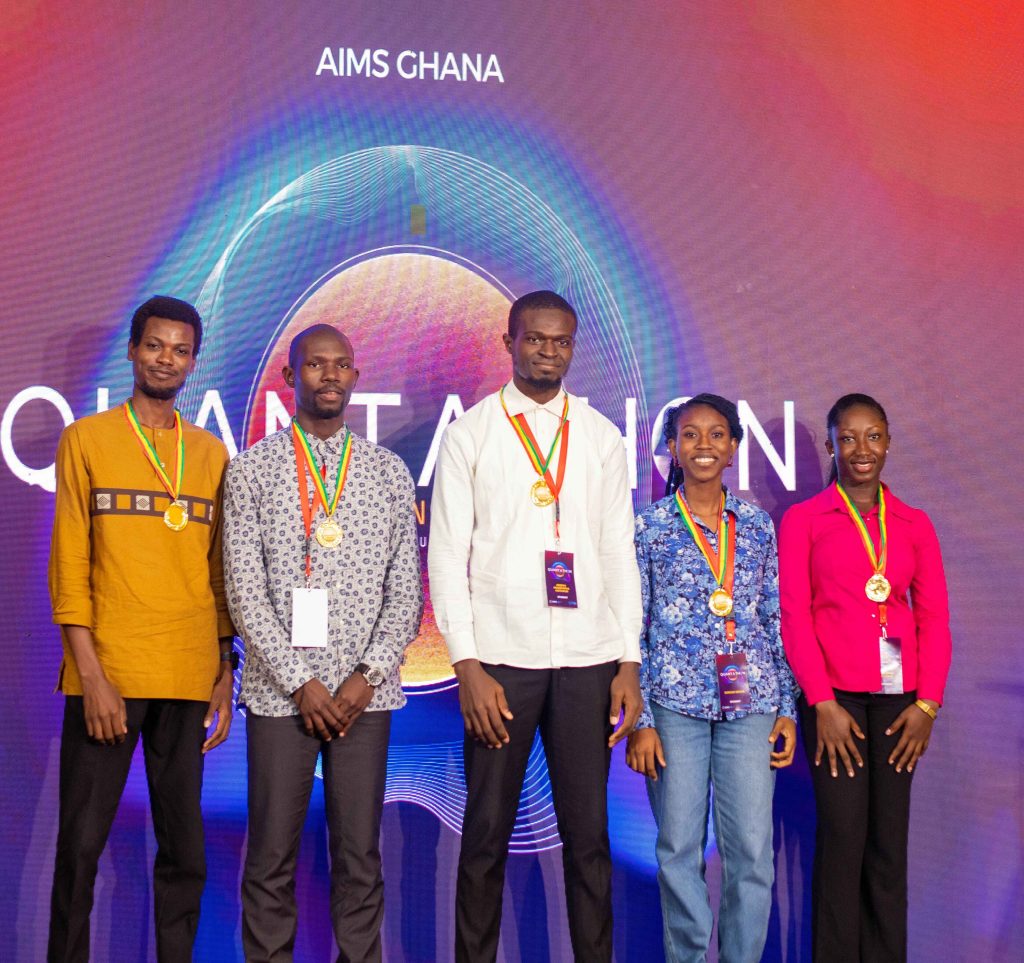
Back in July 2025, Prince Dorcis-Akpaglo and Augustina Agyapomaa Agyeman formed part of the winning team of the AIMS Ghana Hackathon with their project, Qualaria (Quantum Leap Against Malaria). Alongside their teammates, Ndam Abibou, Dorcas Seshie and Astride Melvin Fokam Ninyim, they developed a quantum simulation approach to fast-track drug development for malaria – a disease that continues to impact millions of people across the continent. The team was also presented with the sustainability award, recognising their focus on real-world impact.
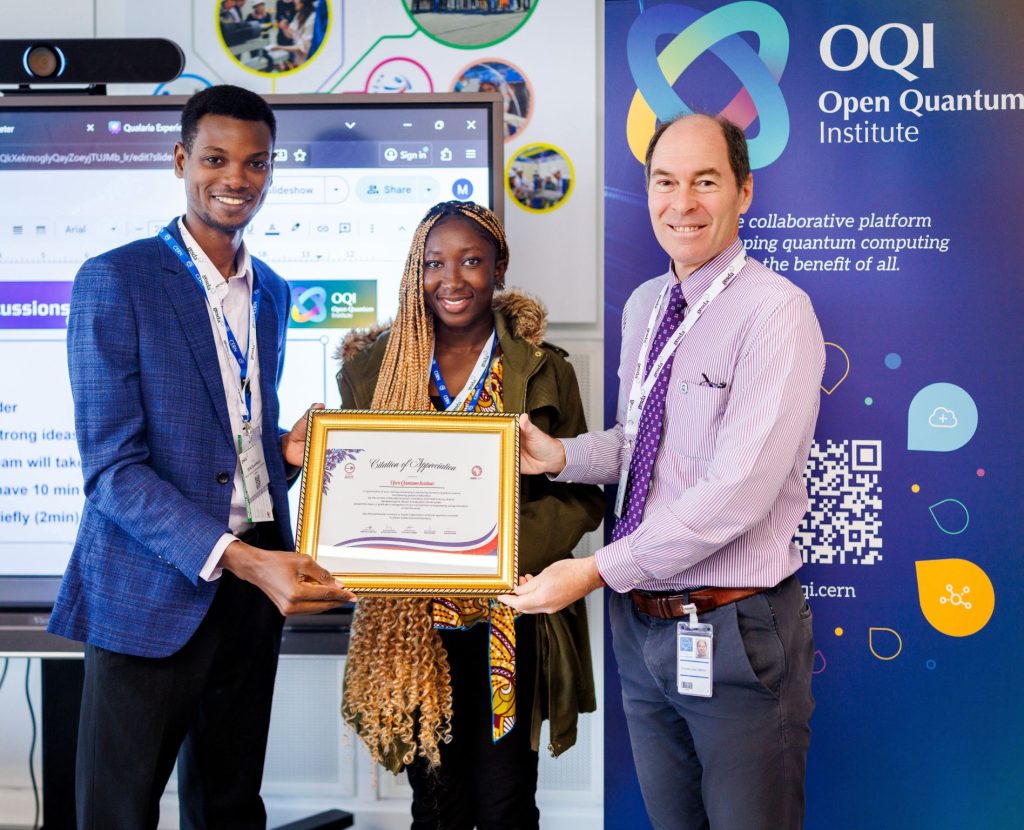
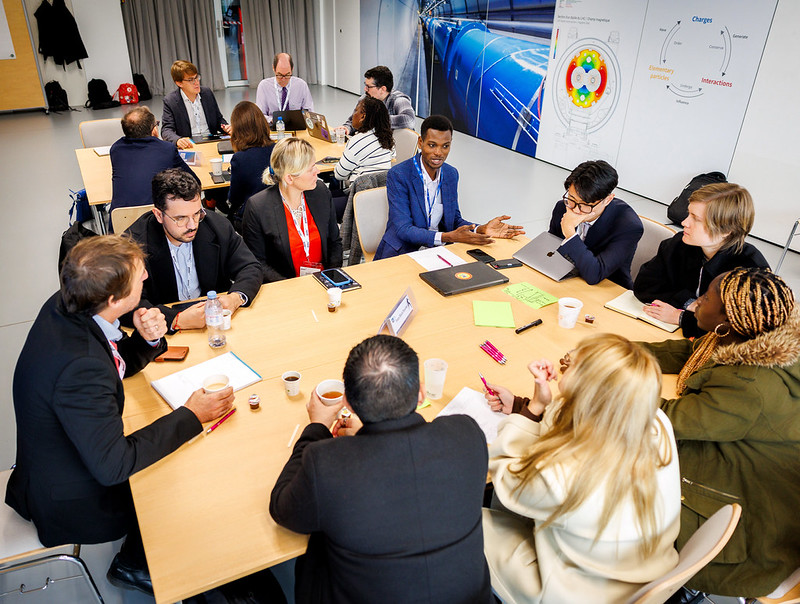
In October 2025, Prince and Augustina visited Geneva and CERN to spend the week with the OQI team and attend the GESDA Summit and Swiss Quantum Week. I sat down with them a few months later to reflect on their hackathon experience, travels to Geneva and what their future plans look like…
Could you start by introducing yourself and tell us how you first got into the field of quantum?
Augustina: I’m currently doing an internship with AIMS Ghana, specifically on quantum machine learning, after completing my master’s degree in mathematical science at AIMS Ghana, and a bachelor’s degree in mathematics from KNUST. I have a strong interest in fields, such as data science, finance, agriculture and using computational tools to address global challenges. I also enjoy working on collaborative projects that allow me to apply my skills in practical and innovative ways. One fun fact about me is that I love to try new things – and that’s what first got me into quantum. I was curious about how to put theory into practice to solve problems.
Prince: My name is Prince, and I’m a software engineer with a background in quantum information. I currently work on quantum computing projects, particularly applying quantum algorithms to drug discovery. I recently graduated with a Master’s degree in mathematical sciences, specialising in quantum information. My interest in quantum science started during my undergraduate maths degree – I really enjoyed quantum mechanics because it has a lot of maths in it! It was during my master’s that I really got more into quantum.
What made you decide to take part in the AIMS hackathon?
Augustina: I first saw the email sent by Dr. Prince Osei, advertising the hackathon to all students and alumni of AIMS. I was curious to know beyond theoretical quantum computing and I also wanted to challenge myself, meet lots of different people from diverse backgrounds and have the chance to share ideas and learn from each other – it was a really great experience!
Prince: During my Master’s we didn’t have anything on quantum computing in our curriculum, but rather in another programme that was running in parallel. I wrote to the school’s management to ask if I’d be able to follow that quantum computing course even though I was not in that programme, and that’s how I ended up following my first quantum computing course and doing my thesis on quantum information. After graduating, I was looking for opportunities to continue in that field, and that’s when I saw the hackathon and decided to apply. The goal was for me to meet and learn from others in the field and I had lots of opportunities to do that during the hackathon!
Could you tell us more about your project, Qalaria?
Augustina: Our project focuses on malaria. Millions of people are affected annually by the disease, especially across Africa, and it has a high mortality rate in children and pregnant women. The challenge lies not only with its treatment, but also the interactions between the environmental, social and biological factors driving transmission. The World Health Organization (WHO) reported that African countries account for approximately 94% of malaria cases worldwide in 2023.
Prince: On the technical aspect, our goal was to apply quantum computing to a real-world problem, but we wanted to see that problem in a much bigger way. This is why we decided to create a quantum enhanced workflow for ligand screening – which is the process for how we select the right molecule that could potentially work as a drug. We identified the necessary steps in the drug discovery process and how quantum computing could be applied. For example: how to identify ligand-binding regions on the parasite protein surface, known as pocket identification. We then used a deep learning algorithm to generate potential ligands, and after this, the screening happens. We used a Variational Quantum Eigensolver (VQE) to calculate the ground state energy of the ligands, selecting the most stable ones. The final step in this process is the binding energy calculation, which involves simulating the docking of the ligands to the protein, then calculating the binding energy and selecting the ligand with the lowest binding energy.
What was your hackathon experience like?
Augustina: For me, the hackathon experience was intense but very rewarding. I was particularly excited to work with people from diverse backgrounds. Our team included members with expertise in quantum computing, computer science, software engineering, and mathematics, which made collaboration both dynamic and effective. Of course, we also faced challenges. One major challenge was translating our idea into a concrete, quantum-based algorithm. However, through teamwork, open communication, and leveraging each other’s strengths, we were able to make meaningful progress. Overall, the experience reinforced the importance of interdisciplinary collaboration in tackling complex problems.
Prince: I knew it was going to be an amazing journey taking part in the hackathon – I just didn’t expect the amount of teamwork and mental energy that would be needed. It was really rewarding! We had the opportunity to meet amazing people and it was amazing to be able to learn from experts and ask questions freely. I agree with Augustina – it was important that we knew how to work together and discuss our ideas and any differences of opinion. Time management was also a challenge. I remember the day of our pitch – we were still coding a lot and trying to submit our last results in time!
What were your first impressions when you arrived in Geneva and CERN for the Summit?
Augustina: It was my first time travelling to Europe and outside of Ghana, so I was extremely excited! I was imagining how cold the weather would be, but it was so much colder than I imagined! And everyone at CERN was so welcoming when we arrived!
Prince: It was an amazing experience – we got to visit some of the experiments at CERN and speak with the OQI team, and everyone was really welcoming. Attending the Summit was a great opportunity to learn a lot and speak to many people.
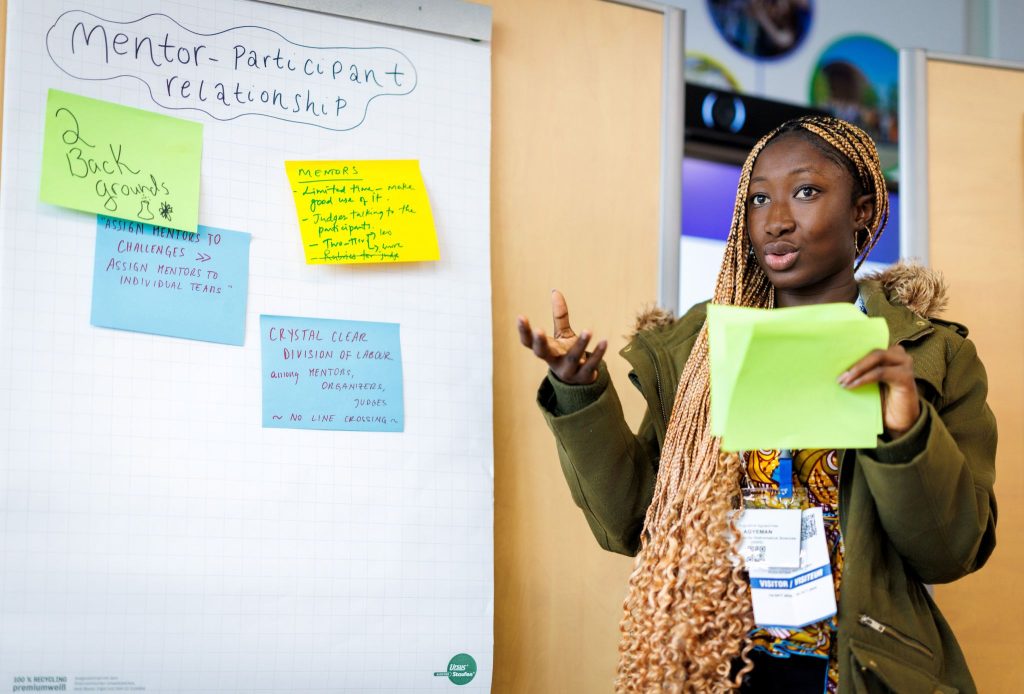
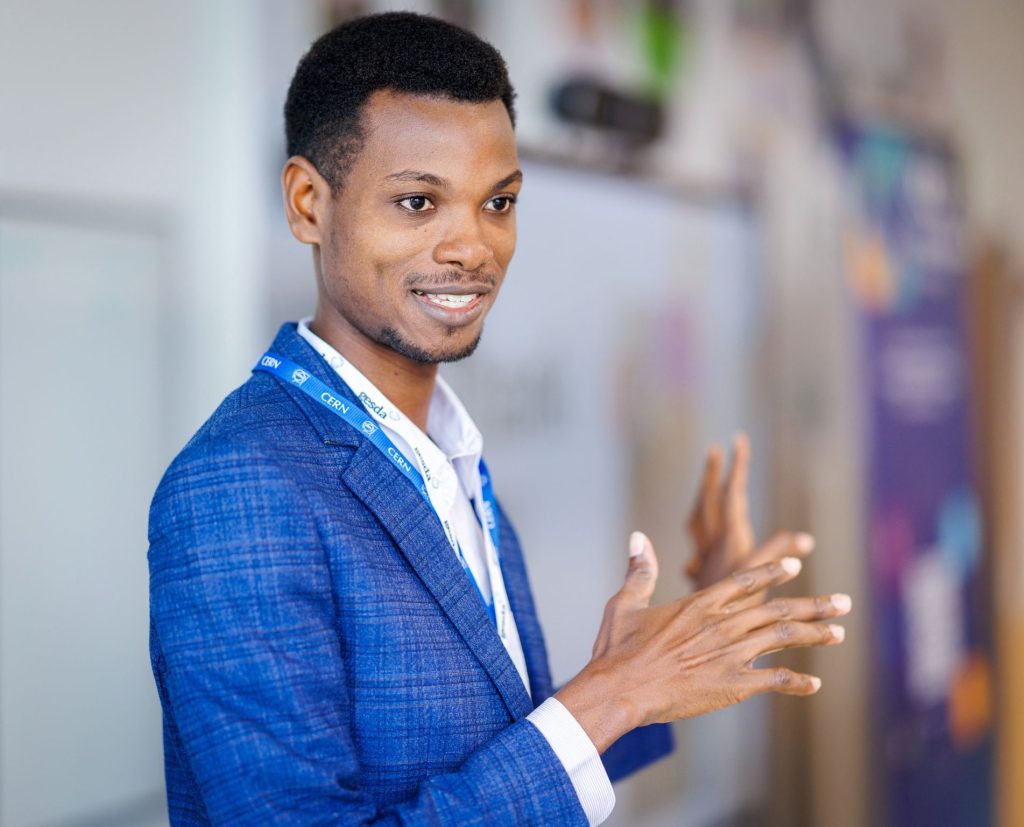
You took part in the hackathon methodology workshop during the Summit. What did you learn from that experience?
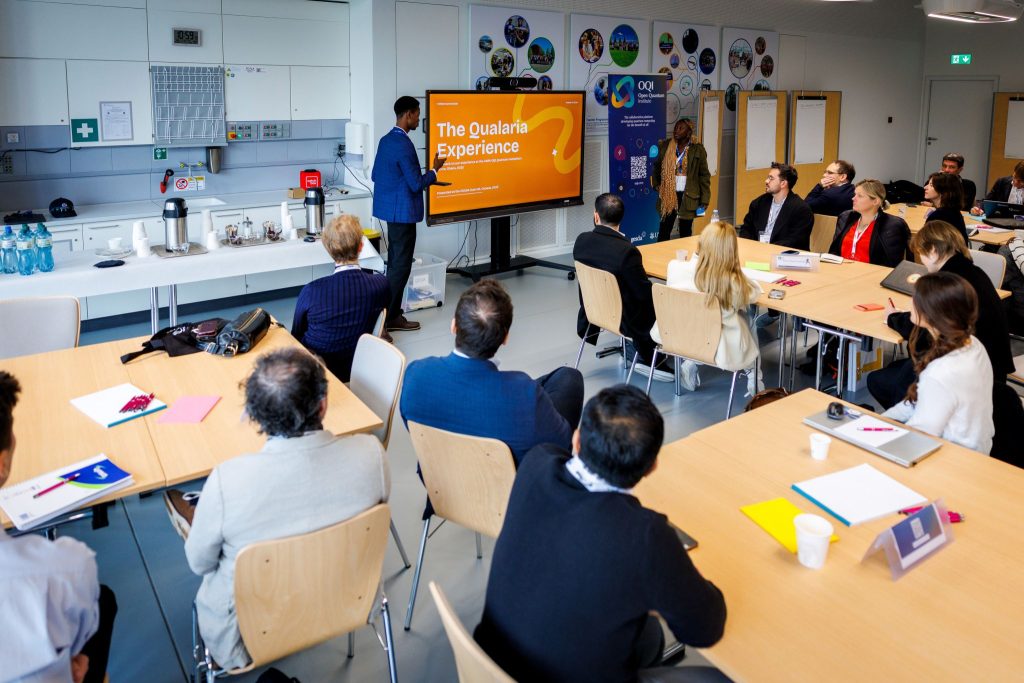
Augustina: One of the key highlights was the opportunity to engage with the community. I spoke with scientists, innovators, policymakers – and these interactions helped me to better understand how different players view science and innovation as a whole. We pitched our project to the room and that experience empowered us and reaffirmed our contribution to global quantum innovation.
Prince: Having the opportunity to present our project really enhanced my confidence. The audience asked really insightful questions that helped us structure our ideas. They weren’t just asking us questions but also sharing their experiences and knowledge with us. It was great for us to be able to share our feedback on the hackathon experience with them as well. All in all, it was a great experience!
Were there any particular sessions during the Summit that inspired you, and can you explain why?
Augustina: There were several sessions that were really inspiring, in particular the session on the future frontiers of mathematics by Minhyong Kim. What stayed with me is the idea that the universe itself can be viewed as a mathematical structure and that the power of mathematics can essentially lead us towards the future. I also found the session on the science of language and communication, which emphasised how linguistic diversity plays a crucial role in advancing our communication and how we share our ideas. It made me realise that science is not just about innovation technologies, but about how we relate to and communicate with each other.
Prince: I enjoyed many of the sessions during the Summit, and during the week we also had the opportunity to attend the Swiss Quantum Week. I had the chance to attend many of the sessions and learn more about quantum innovation in Switzerland and around the world. It was great to have that global perspective and see the collaborations of like minded people all with a similar goal.
What was it like visiting some of the experiments and facilities at CERN?
Augustina: I’d say that visiting the experiments at CERN was one of the highlights of the entire trip! It was both overwhelming and inspiring to see how the fundamental science at CERN is carried out. We got to visit the Antimatter Factory, where we learned how scientists create and trap anti hydrogen atoms to study antimatter. We also went to visit the Compact Muon Solenoid (CMS), where we saw a detector that functions like a very giant and particular camera, capturing millions of particle collisions every second.
Prince: We loved the history of CERN – we saw the Data Centre and heard about the birth of the World Wide Web, while also learning about how enormous volumes of data from the Large Hadron Collider (LHC) are stored and processed. We also visited the Synchrocyclotron, CERN’s first accelerator, where we learned about the history of how CERN was created.
What do you think is essential for sustaining the momentum after hackathons?
Augustina: I think continuity is really important after a hackathon finishes. It’s the follow up and mentorship that really matter to create a clear pathway for teams to move from ideas to proof of concept and eventually real-world applications.
Prince: I completely agree with Augustina – having someone who can give us ongoing mentorship and guide us in the different things we’d like to do to continue the project is really important. After winning the hackathon, it was a priority for us to think about how we can take our idea and develop it into something that is tangible. I think it’s also useful to have the opportunity to connect with other hackathon participants from different countries.
How do you plan to continue developing your project in the future?
Augustina: From the beginning, we were intentional about seeing the hackathon as a starting point. We have already started refining our project’s structure and documentation, working out how to improve and develop it further. We’re also still working on documenting and making sure our work is reproducible and easy for others to understand. This is really important for developing a prototype into something that can be implemented in the research and innovation ecosystem.
Prince: Just to add to this, we want to set up a small research organisation where we can continue this work. The hackathon was only three days, so it wasn’t enough time to take a deep dive into the solutions we’re exploring. So we are currently working on creating a research paper to document our work. One of the researchers we met during the GESDA Summit offered to help guide us through the process of writing our first paper, which is really exciting!
On a personal level, what’s next for you?
Augustina: I’m focusing on deepening my practical experience in quantum computing and I’m currently doing an internship at AIMS Ghana, where I’m focusing on quantum machine learning algorithms. I’m really interested in contributing to a lot of projects at the intersection of quantum and healthcare, especially those with a social impact.
Prince: I’m thinking of setting up a start up, possibly in AI. As a team, we’re also considering setting up a quantum and AI organisation – hopefully in two to three months from now, it should be set up and ready to go.
It was a great opportunity to sit down with Prince and Augustina and hear their insights on taking part in an OQI hackathon, attending the Summit, and looking ahead to the future. We’re looking forward to seeing what you both get up to next!