ASEAN Quantum Summit 2025: Building regional collaboration for the future of quantum technology
19th December 2025
Article by Alexia Yiannouli
Hosted by the Universiti Teknologi Malaysia (UTM), the ASEAN Quantum Summit marked a historic milestone as the first-ever regional summit dedicated to advancing quantum science and technology across Southeast Asia. Representatives from ASEAN Member States gathered to strengthen regional collaboration and explore strategies and policies to drive the responsible development of quantum technologies in the region.
Alongside the support of OQI, Tim Smith (OQI Coordinator) participated in several sessions during the event, contributing to discussions around the importance of equitable access to capacity building and development of the technology.
From quantum hackathon to regional summit
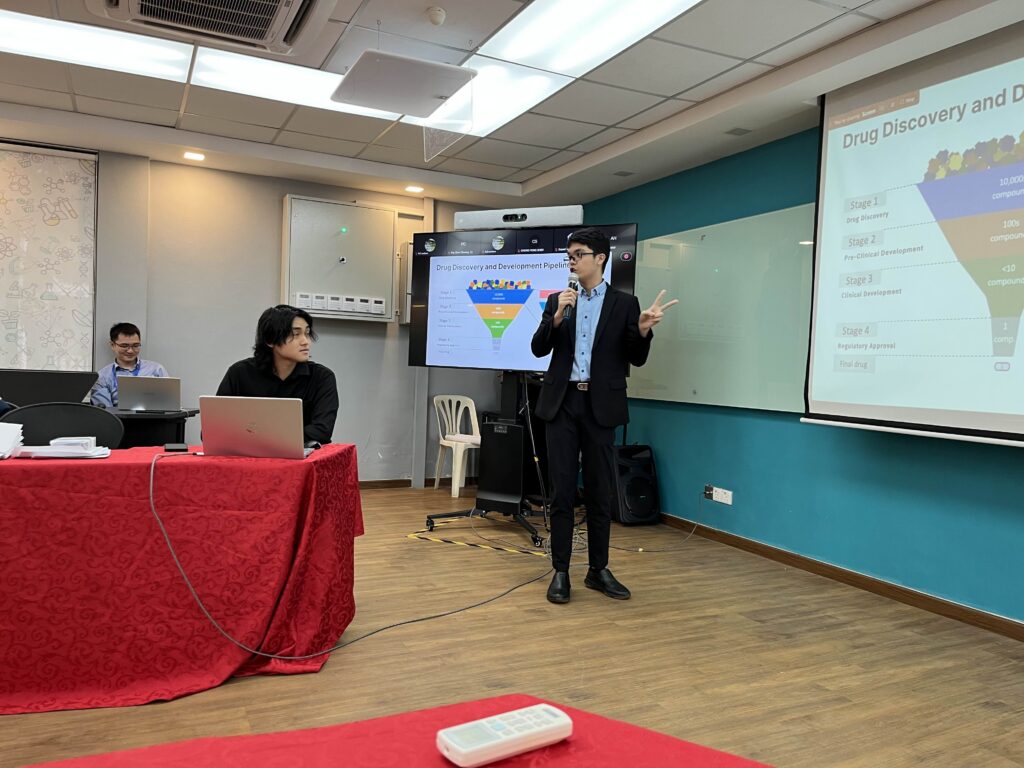
As part of a Student Sharing Session, four teams from the OQI-supported SEA Quantum Hackathon had the opportunity to pitch their projects and quantum computing solutions developed during the hackathon. This session was organised by Pak Shen Choong, an active member of the OQI community and the OQI Educational Consortium, and provided students with the platform to showcase their regionally-relevant quantum computing applications for the SDGs:
- Pharmtom Labs, the winner of the SEA Quantathon 2025, was presented by Kai Ze Tam and Kyle Carlo Lasala. This use case is designed to accelerate early-stage drug discovery for Dengue Fever. It works in two steps, using variational quantum eigensolver geometry optimisation. The first step works to improve the data quality before virtually screening for potential drug molecules, and the second step calculates how strongly a drug molecule could bind to the Dengue virus protein.
- Qu-Alz, the second prize winner of the SEA Quantathon 2025 and the selected use case for the ASEAN IVO Forum 2025 presentation under the topic ICT for Health and Welfare, was presented by Sayed Tahlil Hossain. This quantum use case leverages a hybrid quantum-classical algorithm using light U-Net and quantum convolutional neural network for early detection of Alzheimer’s Disease. The team also defined a new quantum-inspired metric (entanglement entropy score) which shows to be a promising indicator that could reflect Alzheimer’s progression.
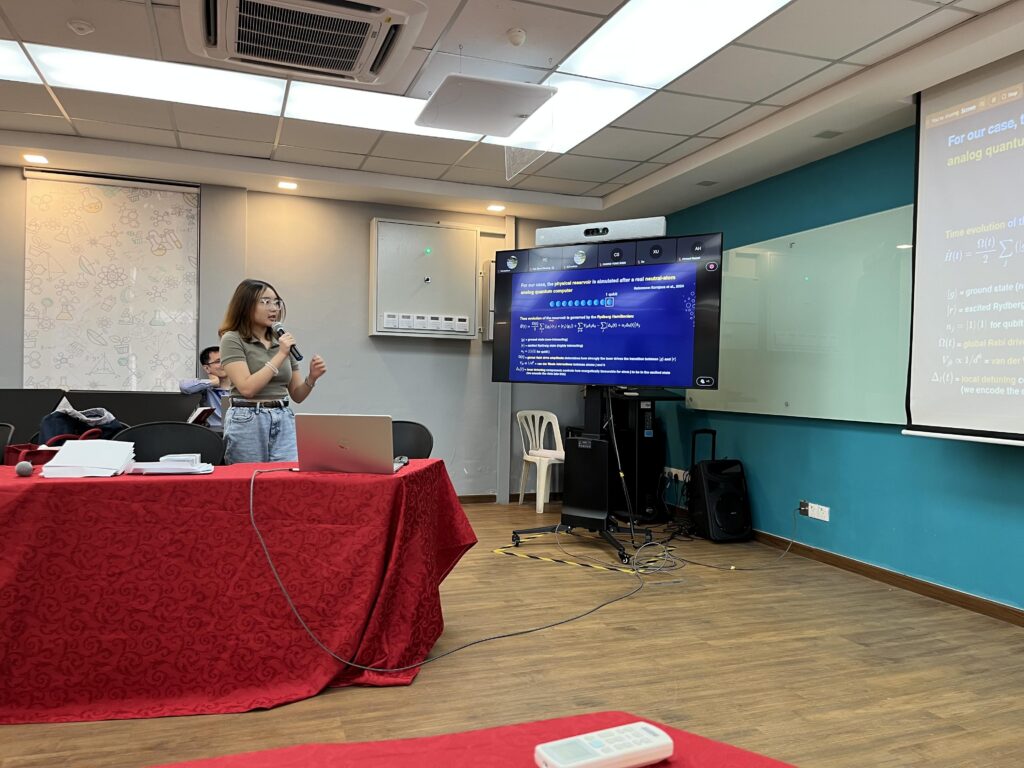
- Quantum Seas, which won the third prize during the SEA Quantathon 2025, was presented by Hui En Tee. This quantum use case uses quantum reservoir computing to predict marine heatwaves and mitigate regional climate impact, which aligns with the ASEAN Blue Economy Framework. The Sea Surface Temperature from 10 different regions over 14 days was encoded into a 10-qubit quantum reservoir computer for forecasting and early detection of marine heatwaves.
- QPreFire was presented by Chun Loong Tan, who was one of 15 students globally selected to attend the Quantum Education Summit 2025 hosted by ICFO in Barcelona. This quantum use case focuses on forest wildfire prediction and to model how wildfires spread and how best to contain them, using a warm-starting quantum approximate optimisation algorithm with XY-mixer. U-Net architecture is used as the forecast model to solve the optimisation problem called the moving firefighter problem, aiming to simulate different firefighting strategies to find the most effective ways to limit damage.
Exploring quantum diplomacy
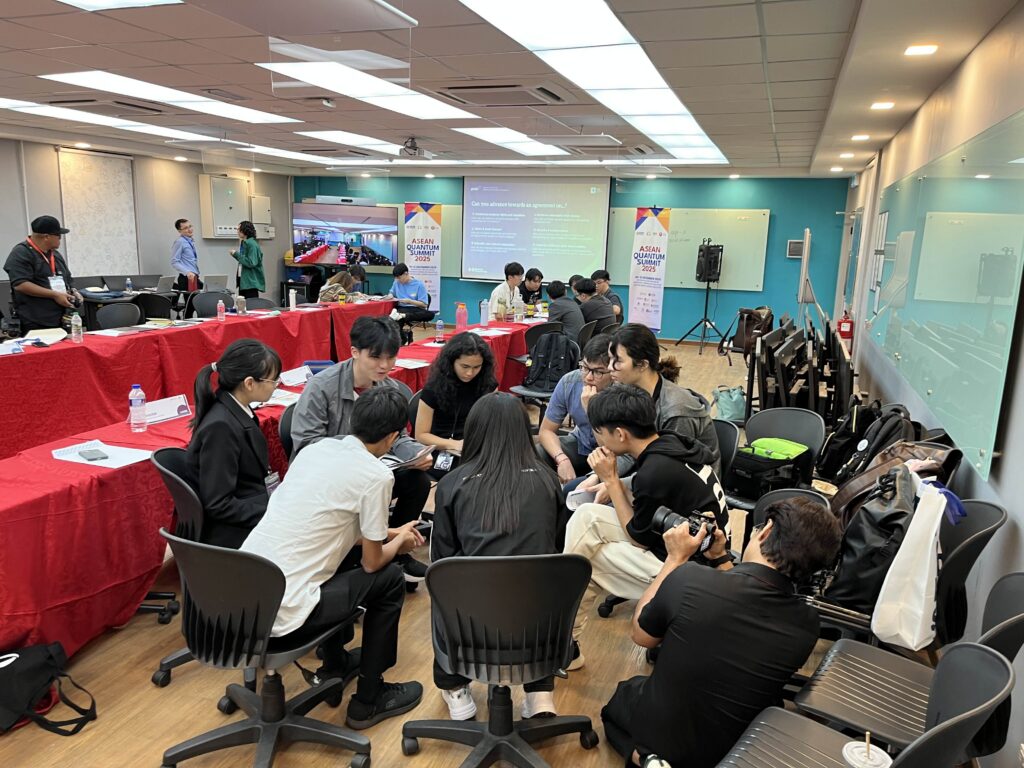
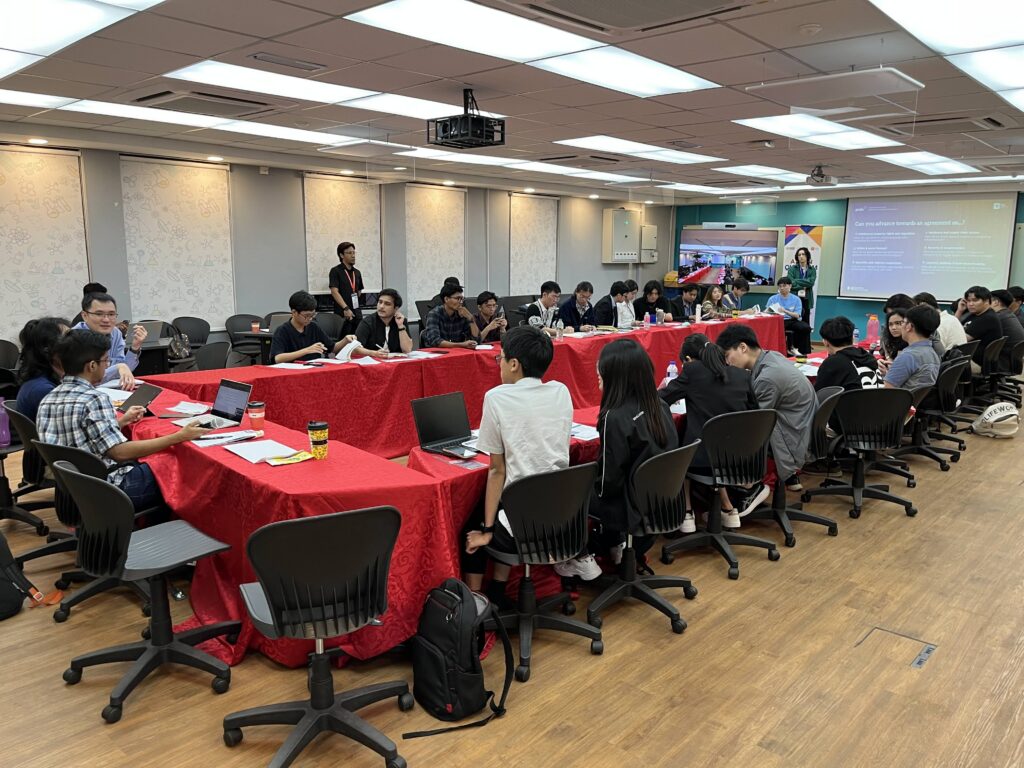
Participants also took part in the Quantum Diplomacy Game, one of OQI’s educational activities.
The game first immerses participants into a fictional scenario of the future, where large-scale quantum computing has been achieved, but the technology is inaccessible for most. Returning to the present, each participant is given a character, taking on the role of scientists, policymakers and industry leaders trying to achieve a more equitable future for quantum tech. Placing multilateral governance at the forefront, the game aims to raise awareness and anticipation of the geopolitical implications of quantum computing as an emerging technology.
Looking ahead to the future of quantum technology
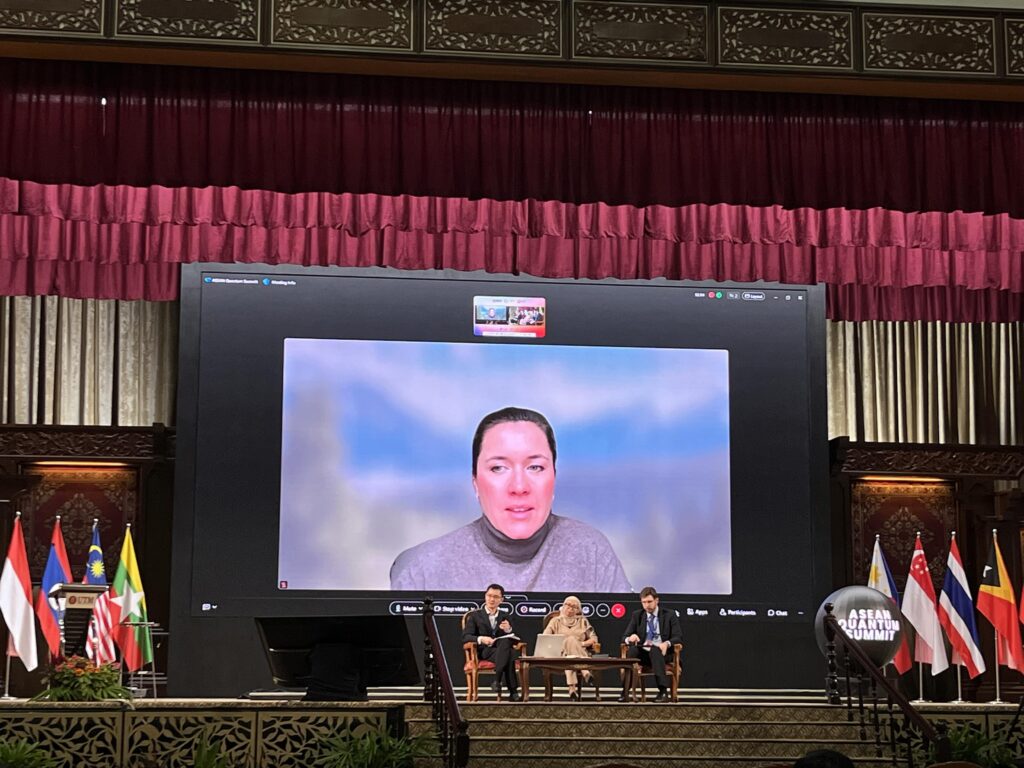
Representing OQI, Mira Wolf-Bauwens (Senior Strategic Advisor Governance and Responsible Computing) joined the hybrid panel ‘International Organisation Forum: Opportunities and Future Outlooks Post IYQ 2025’ moderated by Pak Shen. Discussions addressed how international initiatives like OQI are paving the way for sustainable quantum development beyond the IYQ, emphasising global collaboration, open-access resources and the necessity for putting in place ethical frameworks before the technology is realised.
“Regional ecosystem building events such as this support OQI’s aim to promote global, equitable and inclusive quantum computing education and develop applications for the benefit of humanity,” explained Tim Smith.
We look forward to future collaborations with ASEAN member states to continue advancing an equitable and inclusive global quantum ecosystem and to strengthen engagement across the region.